
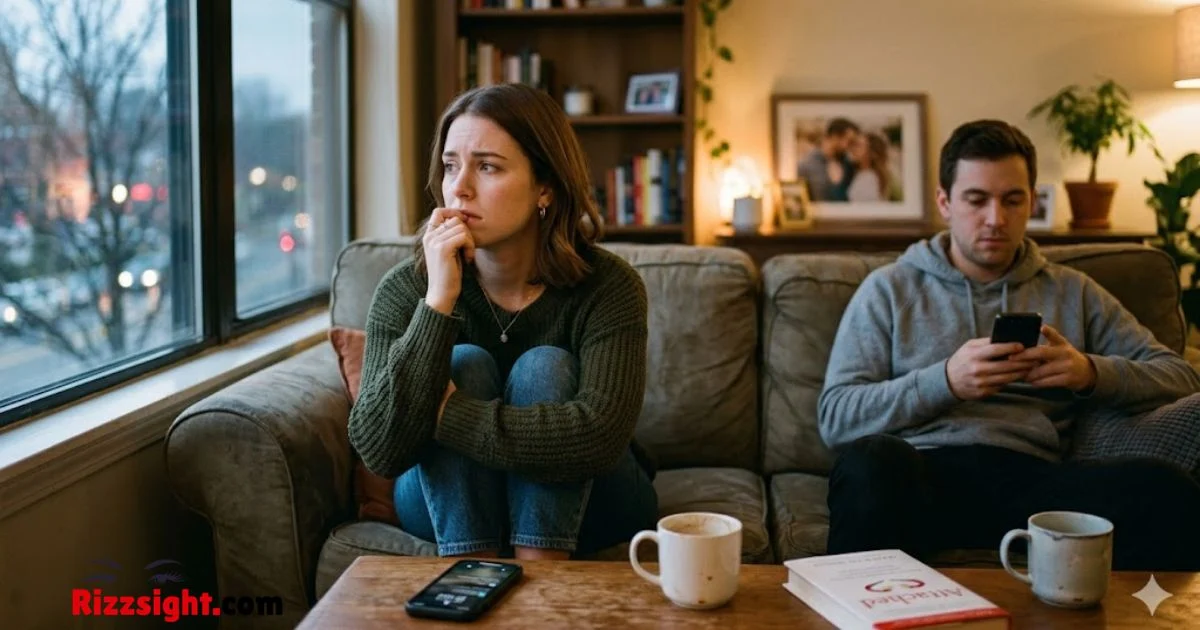
Ever notice how a simple “hey, are you okay?” in text messages, DMs, social media chats, and online conversations can suddenly feel way heavier than it should? That same digital overthinking often shows up in real-life relationships too, which is why people search for Why Do We Get Anxious in Relationships.
In today’s world of online communication, relationship slang meaning, texting behavior, and social media interactions, even small things like delayed replies, short answers, or “seen” messages can trigger stress and uncertainty often described as relationship anxiety, attachment anxiety, or emotional overthinking in relationships. This is especially common in fast-paced digital communication culture, where we expect instant responses and constant availability.
Research in psychology shows that this anxiety is often connected to attachment styles, emotional insecurity, and fear of rejection, which shape how we respond in close relationships. In this article, we’ll break down what this feeling really means, why it happens in romantic connections, and how to manage it in a healthier, more secure way.
Why Do We Get Anxious in Relationships Psychology
Relationship anxiety is common in modern dating and long-term bonds. It often shows up as overthinking, emotional uncertainty, and fear of losing your partner. In relationship psychology, this experience connects strongly to attachment styles, emotional security, and fear of rejection.
Below is a clear breakdown of why it develops, how it feels, and how to tell the difference between normal concern and anxiety-driven thoughts.
Why Relationship Anxiety Develops in the First Place
Relationship anxiety develops when your mind learns to expect emotional uncertainty in close bonds. Psychology explains this through attachment theory, which shows how early life experiences shape adult relationships.
Common causes include:
- Inconsistent emotional support in childhood
- Past heartbreak or betrayal
- Emotional neglect or rejection
- Low self-esteem and self-worth issues
These experiences train the brain to stay alert for danger in relationships. This creates emotional hypervigilance, where you constantly scan for signs of rejection even when nothing is wrong.
Relationship Anxiety or Gut Feeling
People often confuse relationship anxiety with intuition, but they feel very different.
A gut feeling feels calm, grounded, and steady. Relationship anxiety feels urgent, loud, and emotionally charged.
| Gut Feeling | Relationship Anxiety |
| Calm and clear | Racing thoughts |
| Based on patterns | Based on fear |
| Stable emotion | Emotional spikes |
If your body feels tense and your mind spirals, it is usually anxiety, not intuition.
Relationship Anxiety or Not in Love
A common question is whether anxiety means you are not in love anymore. In most cases, it does not.
If you still care deeply but feel fear of losing your partner, that points to relationship anxiety or attachment insecurity. If you feel emotionally disconnected for a long time without fear or worry, that may point to a deeper emotional mismatch.
Psychology shows that emotional insecurity in relationships can create doubt even in healthy love.
Overthinking vs Intuition in Relationships
Overthinking creates stories that are not based on facts. Intuition reflects simple awareness without panic.
Signs of overthinking in relationships include:
- Replaying conversations repeatedly
- Assuming negative meanings from small actions
- Expecting worst-case outcomes
- Seeking constant reassurance
Intuition feels different. It is steady, quiet, and does not spiral. A simple rule applies: anxiety questions everything, intuition stays clear.
Difference Between Healthy Concern and Relationship Anxiety
Healthy concern protects relationships. Relationship anxiety drains them.
| Healthy Concern | Relationship Anxiety |
| Based on real behavior | Based on assumptions |
| Leads to communication | Leads to overthinking |
| Temporary feeling | Constant mental loop |
Healthy concern sounds like asking for clarity. Anxiety sounds like assuming rejection without evidence.
Relationship Anxiety Symptoms
Relationship anxiety symptoms often affect thoughts and emotions, such as:
- Constant need for reassurance
- Fear of abandonment
- Jealous thoughts without real proof
- Difficulty trusting your partner
- Emotional dependency
These signs often connect with attachment anxiety and emotional insecurity.
Physical Symptoms of Relationship Anxiety You Should Know
Relationship anxiety also affects the body because the brain activates the fight-or-flight response.
Common physical symptoms include:
- Fast heartbeat
- Tight chest
- Upset stomach
- Restlessness
- Trouble sleeping
Even though there is no real danger, your body reacts as if there is.
Signs You’re Overanalyzing Your Partner’s Behavior
You may be dealing with overanalyzing in relationships if you:
- Overthink short or delayed texts
- Track response times closely
- Misread tone in messages
- Create stories based on small changes
Example: Your partner replies with “okay.” Your mind assumes they are upset, even without proof. This is cognitive distortion driven by anxiety, not reality.
Read More: Gen Z Rizz Slang Lines That Hit Different in Flirting
When Does Relationship Anxiety Hit?
Relationship anxiety often appears during:
- Early dating stages
- After arguments or emotional distance
- During unclear communication periods
- Times of personal stress
It becomes stronger when emotional certainty feels low.
Emotional Triggers That Make Relationship Anxiety Worse
Common emotional triggers in relationships include:
- Delayed replies
- Cancelled plans
- Reduced affection
- Sudden tone changes
These triggers activate fear-based thinking like “something is wrong,” even when nothing has changed.
How Social Media Triggers Relationship Anxiety
Social media increases relationship insecurity through constant visibility and comparison.
Main triggers include:
- Online activity status
- Read receipts
- Comparing relationships on Instagram or TikTok
- Overidealized relationship content
This creates comparison anxiety, where real relationships feel less stable than online versions.
How Childhood Experiences Shape Relationship Anxiety
Childhood experiences strongly influence adult emotional patterns. If love felt inconsistent growing up, the brain learns to expect uncertainty.
This can lead to:
- Fear of abandonment
- Difficulty trusting partners
- Need for constant reassurance
Psychologists call this early emotional conditioning, and it directly affects adult relationship behavior.
Attachment Styles and Their Role in Relationship Anxiety
Your attachment style in relationships plays a major role in how you experience anxiety.
| Attachment Style | Relationship Pattern |
| Secure | Trusts and communicates well |
| Anxious | Fears rejection and needs reassurance |
| Avoidant | Avoids closeness and emotional dependency |
| Disorganized | Mixed emotional responses |
The anxious attachment style is most strongly linked with relationship anxiety, especially fear of abandonment and rejection.
Is Relationship Anxiety a Form of Insecurity?
Yes, in most cases relationship anxiety is closely connected to emotional insecurity, but it is not exactly the same thing. Insecurity is the deeper belief that you are not “enough” or that love can be taken away. Relationship anxiety is how that insecurity shows up in real-time thoughts, behaviors, and reactions inside a relationship.
In simple terms, insecurity is the root, and relationship anxiety is the response.
Relationship Anxiety vs Trust Issues Explained
People often mix relationship anxiety with trust issues, but they are different in how they form and show up.
| Relationship Anxiety | Trust Issues |
| Comes from fear of loss | Comes from past betrayal |
| Focuses on “what if” thoughts | Focuses on evidence from past |
| Overthinking and worry | Suspicion and doubt |
| Can exist even in healthy relationships | Often linked to past cheating or dishonesty |
Someone can fully trust their partner and still experience anxiety due to attachment insecurity.
Can Relationship Anxiety Damage a Healthy Relationship?
Yes, if it is not managed, relationship anxiety symptoms can put pressure on even a healthy relationship. It often shows up as:
- Constant reassurance-seeking
- Overanalyzing messages and behavior
- Emotional dependence
- Misreading normal situations as problems
Over time, this can create frustration in the relationship because one partner feels pressured while the other feels misunderstood.
However, with awareness and communication, most relationships can stay healthy.
Read More: Costco Pickup Lines That Actually Get Laughs Fast(2026)
What’s the Purpose of Anxiety?
Anxiety is not random. Psychologically, its purpose is protection. The brain uses anxiety responses to detect danger and prevent emotional loss.
In relationships, this system sometimes misfires. Instead of protecting you from real danger, it reacts to:
- Delayed replies
- Small changes in tone
- Normal emotional distance
So the original purpose is safety, but in modern relationships, it often becomes overactive emotional alarm signaling.
Does Acting Anxious Actually Help?
Acting on anxiety usually does not help relationships. It often makes things worse.
Common anxious behaviors include:
- Double texting repeatedly
- Asking for reassurance too often
- Assuming negative meaning without proof
These actions may reduce fear temporarily, but they increase long-term relationship insecurity because they weaken trust and emotional balance.
How Do You Stop the Anxiety Spiral?
The anxiety spiral in relationships happens when one thought triggers another until you feel overwhelmed.
To stop it:
- Pause before reacting
- Separate facts from assumptions
- Avoid checking messages repeatedly
- Focus on present evidence, not imagined outcomes
The goal is to interrupt the loop before it grows.
What to Do Instead of Acting Anxious
Instead of reacting emotionally, shift to grounded actions:
- Ask clear and calm questions
- Wait before responding to triggers
- Focus on real behavior, not thoughts
- Write down what is actually happening vs what you fear
This reduces emotional reactivity in relationships and builds stability.
Relationship Anxiety How to Overcome
To overcome relationship anxiety, focus on building internal security instead of seeking constant external reassurance.
Key steps include:
- Strengthening self-worth
- Learning emotional regulation
- Understanding your attachment style
- Practicing healthy communication
Over time, your brain learns that not every uncomfortable feeling means danger.
Breaking the Cycle of Constant Reassurance-Seeking
Constant reassurance-seeking creates a cycle:
Anxiety → reassurance → temporary relief → more anxiety
To break it:
- Reduce repeated “Are we okay?” questions
- Build tolerance for uncertainty
- Self-soothe instead of asking others immediately
This helps develop emotional independence in relationships.
Read More: Kristi Noem Height Facts Real Stats & 2026 Update
How Communication Affects Relationship Anxiety
Communication can either reduce or increase anxiety.
Healthy communication:
- Clear and honest conversations
- Consistent emotional feedback
- Setting expectations early
Unhealthy communication:
- Mixed signals
- Avoiding important talks
- Inconsistent responses
Strong communication builds relationship security and emotional trust.
Can Therapy Help with Relationship Anxiety?
Yes, therapy is one of the most effective ways to manage relationship anxiety.
Therapies like:
- Cognitive Behavioral Therapy (CBT)
- Attachment-based therapy
- Talk therapy
help people:
- Identify negative thought patterns
- Reduce overthinking cycles
- Build secure attachment behaviors
Therapy helps retrain how your brain responds to emotional triggers.
How Long Does Relationship Anxiety Last
There is no fixed timeline. It depends on:
- Your attachment style
- Past experiences
- Emotional awareness
- Whether you actively work on it
For some people, it improves in weeks with awareness. For others, it takes months of consistent emotional work and relationship stability.
Relationship Anxiety Test
A simple self-check for relationship anxiety symptoms:
- Do I overthink small changes in behavior?
- Do I need constant reassurance?
- Do I fear abandonment even without proof?
- Do I misread neutral situations as negative?
If you answer “yes” to most, you may be experiencing attachment anxiety patterns rather than simple worry.
Relationship Anxiety Reddit
On platforms like Reddit, users often describe relationship anxiety as:
- Constant overthinking after texting
- Fear of being ignored or replaced
- Emotional ups and downs based on partner responses
Conclusion
These discussions highlight a common pattern: many people experience similar fears, especially in modern digital communication relationships where messaging plays a big eConclusion
Relationship anxiety is more common than most people think, and it usually comes from a mix of emotional insecurity, attachment patterns, and past relationship experiences. It can make you question your partner, overthink small actions, and feel uncertain even when nothing is actually wrong.
The important thing to understand is that anxiety is not a sign that your relationship is failing. It is a signal that your mind is trying to protect you, even if it sometimes overreacts. When you learn to separate facts from assumptions, manage emotional triggers, and communicate openly, you slowly reduce that inner stress.
Healthy relationships are not free from doubt, but they are built on trust, emotional awareness, and secure attachment habits. With the right mindset and support, relationship anxiety can be controlled and improved over time.
FAQs
What causes relationship anxiety?
Relationship anxiety is usually caused by attachment insecurity, past heartbreak, low self-esteem, and fear of rejection. Early childhood experiences can also shape how you respond to emotional closeness.
Is relationship anxiety normal?
Yes, it is very normal. Many people experience overthinking in relationships, especially during early dating stages or when communication feels unclear.
Can relationship anxiety go away?
Yes. With self-awareness, better communication, and sometimes therapy, relationship anxiety symptoms can significantly reduce or disappear over time.
How do I know if it’s anxiety or intuition?
Anxiety feels loud, emotional, and stressful. Intuition feels calm and clear. If you are spiraling or overthinking, it is more likely relationship anxiety.
Does relationship anxiety mean I don’t love my partner?
No. Feeling anxious does not mean you don’t love your partner. It often means you are dealing with emotional insecurity or attachment anxiety, not lack of love.
How do I stop overthinking in a relationship?
Focus on facts instead of assumptions, reduce reassurance-seeking, and practice calm communication. Building emotional regulation skills helps break the cycle of overthinking.
Can social media make relationship anxiety worse?
Yes. Social media can increase comparison anxiety, overthinking, and insecurity through online activity tracking, idealized relationships, and constant visibility.
Should I talk to my partner about my anxiety?
Yes. Honest and calm communication helps build trust. Sharing your feelings in a healthy way can reduce misunderstandings and improve emotional connection.
motional role.

Hi, I’m Lauren Reynolds
I contribute as an Author for RizzSight.com, blending creativity and humor to deliver rizz lines and puns that are unforgettable. Whether you need a line for love or laughter, I’m here to help you shine!